Neuroplasticity and Purpose: How Finding Meaning Physically Rewires Your Brain
By Dr. Levi Brackman
Published March 30, 2026 · 9 min read
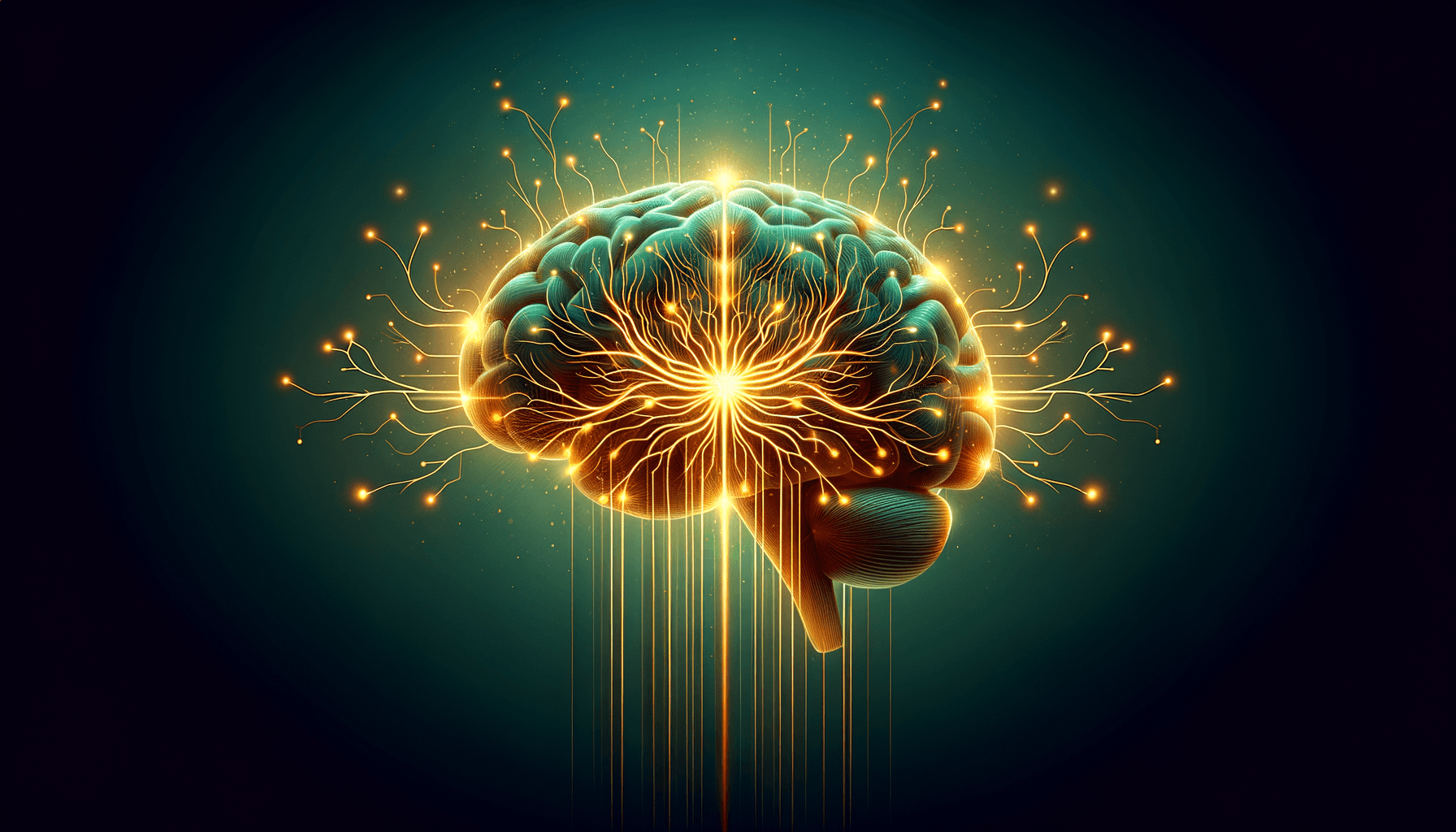
Neuroplasticity and purpose are deeply connected. Neuroscience reveals that pursuing meaningful goals physically rewires your brain - strengthening the prefrontal cortex, reshaping reward circuits, and building resilience at the neural level. This article explores the science behind how purpose changes your brain and why that matters for your health and direction.
When we talk about finding purpose, we usually describe it in psychological terms - feeling motivated, having direction, experiencing meaning. However, neuroscience is revealing something far more concrete: neuroplasticity and purpose are directly connected. Pursuing meaningful goals doesn't just change how you feel. It physically changes the structure and function of your brain.
This is not metaphor. Brain imaging studies show that people who report a strong sense of purpose exhibit measurably different neural architecture compared to those who lack direction. Their prefrontal cortex is more active. Their stress response is better regulated. Their reward circuits process satisfaction differently. Purpose, it turns out, is not just a philosophy - it is a neurological event.
What Neuroplasticity Actually Means
Neuroplasticity refers to the brain's ability to reorganize itself by forming new neural connections throughout life. For most of the twentieth century, neuroscientists believed the adult brain was essentially fixed - that after a critical developmental period in childhood, neural structure was set. That assumption has been thoroughly overturned.
Research from the National Institutes of Health has demonstrated that the brain continues to reorganize itself in response to experience, learning, and behavior well into old age. Every time you learn a new skill, form a new habit, or repeatedly engage in a particular kind of thinking, you strengthen specific neural pathways and weaken others. The brain you have today is literally shaped by how you have used it.
This is where purpose enters the picture. If neuroplasticity means the brain reshapes itself around repeated experience, then pursuing meaningful goals - consistently, over time - should leave a measurable imprint on brain structure. And that is exactly what researchers have found.
How Purpose Changes the Prefrontal Cortex
The prefrontal cortex sits behind your forehead and serves as the brain's executive control center. It handles planning, decision-making, goal-directed behavior, and emotional regulation - all functions directly connected to living with purpose.
Research published in Social Cognitive and Affective Neuroscience has shown that individuals who report higher levels of eudaimonic wellbeing - the kind of deep satisfaction that comes from meaning and purpose rather than pleasure alone - display greater activity and stronger connectivity in the prefrontal cortex. This isn't a coincidence. Purpose requires exactly the cognitive functions the prefrontal cortex supports: holding long-term goals in mind, inhibiting short-term impulses, and making decisions aligned with deeper values.
The relationship works in both directions. As you practice purposeful behavior - setting goals, making values-aligned choices, persisting through difficulty - you strengthen the prefrontal circuits that support those behaviors. Over time, purposeful living becomes easier, not because the world gets simpler, but because your brain has literally rewired itself to support it.
This finding has profound implications for anyone feeling stuck or directionless. The brain regions that support purpose are not fixed at birth. They respond to practice. Every purposeful action you take is, at the neural level, an investment in your capacity for more purpose.
Neuroplasticity and Purpose: The Reward Circuit Connection
One of the most important brain systems affected by purpose is the mesolimbic pathway - the reward circuit that releases dopamine in response to satisfying experiences. This system evolved to motivate survival behaviors like eating and social bonding, but it also responds powerfully to meaning.
Research from Psychological Science has revealed a critical distinction in how the brain processes hedonic pleasure (the momentary enjoyment from a good meal or entertainment) versus eudaimonic satisfaction (the deeper fulfillment from purposeful activity). Hedonic pleasure activates the reward circuit briefly and intensely, then fades - creating a cycle of craving and consumption. Eudaimonic satisfaction produces a more sustained and moderate activation that builds over time.
This difference matters enormously. The hedonic treadmill - the well-documented tendency for pleasure-seeking to produce diminishing returns - is a neuroplastic phenomenon. The more you chase quick dopamine hits, the more your reward circuit adapts to require them. Conversely, the more you pursue meaningful goals, the more your reward circuit calibrates toward sustained satisfaction.
In practical terms, this means that people who consistently pursue purpose gradually develop brains that find deeper satisfaction in meaningful work and relationships, while requiring less stimulation from superficial pleasures. Their neurology shifts to support what actually fulfills them.
The Stress Buffering Effect at the Neural Level
We have explored how purpose protects mental health and physical health in previous articles. Neuroscience now helps explain the mechanism behind those protective effects.
The amygdala - the brain's threat detection center - plays a central role in the stress response. When the amygdala perceives danger, it triggers a cascade of cortisol and adrenaline that prepares the body for fight or flight. Chronic activation of this system damages cardiovascular health, suppresses immunity, and accelerates aging.
Research from the University of Wisconsin-Madison and published in Proceedings of the National Academy of Sciences has demonstrated that people with higher eudaimonic wellbeing show reduced amygdala reactivity to threatening stimuli. Additionally, they display stronger functional connectivity between the prefrontal cortex and the amygdala - meaning their rational, goal-oriented brain regions exert more effective control over their emotional responses.
Through neuroplasticity, regularly engaging in purposeful behavior strengthens this prefrontal-amygdala connection over time. Purpose doesn't eliminate stress. Instead, it builds neural infrastructure that processes stress more efficiently, preventing the kind of chronic activation that damages health.
This aligns with what the Greater Good Science Center at UC Berkeley has documented about purpose serving as a "stress buffer." The neuroscience shows us that this buffer isn't just psychological - it is architectural. It is built into the physical structure of purposeful brains.
The Default Mode Network: Where Purpose Takes Shape
One of the most fascinating neuroscience discoveries of the past two decades is the default mode network (DMN) - a set of interconnected brain regions that become active when you are not focused on external tasks. The DMN activates during daydreaming, self-reflection, future planning, and autobiographical thinking.
Research published in NeuroImage suggests that the DMN plays a crucial role in constructing your sense of identity and narrative - the story you tell about who you are, where you have been, and where you are going. This is precisely the kind of thinking that purpose requires.
People with a strong sense of purpose show different DMN activity patterns compared to those who feel directionless. Their default mode thinking is more coherent and future-oriented. Rather than ruminating on past failures or anxiously cycling through worries, their DMN engages in constructive self-reflection - integrating past experiences with future goals in a way that produces clarity rather than confusion.
This connects directly to our understanding of how experiential learning builds purpose. When you have meaningful experiences and then reflect on them, you are engaging the DMN in precisely the way that strengthens purpose-related neural patterns. The brain needs both experience and reflection to construct a coherent sense of direction.
Age Is Not a Barrier: Neuroplasticity Across the Lifespan
One of the most encouraging aspects of neuroplasticity research is that the brain remains changeable throughout life. While plasticity is greatest during childhood and adolescence, significant neural reorganization continues into the 60s, 70s, and beyond.
A landmark study published in the Journal of the American Geriatrics Society found that older adults with a strong sense of purpose showed greater cognitive resilience and even reduced risk of Alzheimer's disease. This suggests that purpose-related neural activity may actively protect against age-related cognitive decline.
For people exploring purpose after 50 or navigating retirement identity, this research offers important reassurance. The brain's capacity to rewire around new meaning and direction does not expire. Starting a purpose discovery process at 55 or 65 is not too late - the neural machinery that supports growth and adaptation is still operational.
Similarly, for teens discovering their purpose and college students finding direction, the heightened neuroplasticity of young brains means that purpose-building activities during these years create especially strong and durable neural pathways. The investment in self-discovery during adolescence and early adulthood pays neurological dividends for decades.
Character Strengths and Neural Signatures
Our research at PurposeLife integrates character strengths assessment into the purpose discovery process. Neuroscience supports this approach in a remarkable way: different character strengths appear to activate different neural networks.
Research on character strengths and purpose shows that when people use their signature strengths, they experience greater engagement and vitality. Brain imaging studies suggest this happens because signature strengths engage neural circuits that have been reinforced through years of natural use. Creativity activates different networks than perseverance. Leadership engages different circuits than kindness.
When you align your daily activities with your character strengths, you are working with your brain's existing architecture rather than against it. This is why strengths-based purpose feels effortless in a way that arbitrary goal-setting does not. You are following neural pathways that your brain has already optimized through years of experience.
The VIA Institute on Character has documented 24 universal character strengths, and our purpose assessment connects your unique strengths profile to concrete purpose themes. From a neuroscience perspective, this approach works because it identifies the neural pathways that are already strongest and builds purpose around them.
Practical Implications: Building Purpose Through Neural Habits
Understanding neuroplasticity and purpose changes how we approach the search for meaning. Purpose is not something that strikes you in a flash of insight. It is something you build - neural connection by neural connection - through repeated, intentional action.
Here are evidence-based practices that leverage neuroplasticity to strengthen purpose:
Reflective journaling. Writing about meaningful experiences engages the default mode network in constructive self-reflection. Research shows that regular journaling strengthens the neural connections between experience and meaning-making. Even ten minutes daily can produce measurable effects over weeks.
Strengths-based action. Deliberately using your character strengths each day reinforces the neural circuits that support engagement and purpose. The more you use a strength, the stronger its neural pathway becomes, and the more naturally purposeful behavior flows.
Goal visualization. Neuroscience research confirms that vividly imagining future goals activates many of the same brain regions as actually pursuing them. Regular visualization of your purpose-aligned future strengthens the prefrontal circuits that support long-term planning and motivation.
Mindful presence. Mindfulness practice has been shown to increase prefrontal cortex thickness and strengthen its connections to the amygdala - precisely the neural changes associated with purposeful living. Even brief daily mindfulness practice builds the neural infrastructure that supports purpose.
Novel experiences. Trying new activities and stepping outside routines stimulates neuroplasticity broadly. This is why experiential learning is so powerful for purpose discovery - novelty forces the brain to form new connections, some of which reveal unexpected sources of meaning.
The Neuroscience of Getting Unstuck
If you feel directionless, neuroscience offers both an explanation and a path forward. Feeling stuck is, in part, a neural phenomenon. When your brain has spent years running the same routines without meaningful engagement, the pathways associated with purpose - prefrontal planning, eudaimonic reward processing, constructive self-reflection - may have weakened from disuse.
However, the same neuroplasticity that allowed those pathways to weaken can strengthen them again. The process requires consistent, intentional action rather than passive waiting for inspiration. Each time you choose a meaningful activity over a mindless one, you are casting a vote for the neural architecture of purpose.
This aligns with what our PhD research with over 1,288 participants revealed: those who started with the least clarity about their purpose showed the greatest gains from structured purpose-fostering intervention. The brain is most responsive to change when the gap between current state and desired state is largest.
Your Brain Is Waiting
The science of neuroplasticity and purpose points toward a remarkable conclusion: your brain is not a passive observer of your search for meaning. It is an active participant. Every time you pursue something meaningful, reflect on your values, or use your character strengths in service of something larger than yourself, your brain physically reorganizes to support more of the same.
Purpose is not a destination you arrive at. It is a neural pattern you cultivate - one intentional action at a time.
If you are ready to start building that pattern, our free purpose assessment provides a structured, scientifically validated framework for identifying your unique strengths and direction. It is designed to engage exactly the kind of reflective, strengths-based, future-oriented thinking that neuroscience shows builds purposeful brains.
Your brain has been waiting for a reason to rewire. Give it one.
Ready to discover your purpose?
Take our free purpose assessment and start your journey today.
Take the Free Assessment