Nature and Purpose: How Time Outdoors Helps You Find Direction
By Dr. Levi Brackman
Published April 9, 2026 · 9 min read
A growing body of research reveals that spending time in nature significantly strengthens your sense of purpose and meaning in life. From reducing mental clutter to inspiring awe and self-reflection, the outdoors offers a unique environment for purpose discovery. This article explores the science behind the nature-purpose connection and provides practical strategies for using time outside to clarify your direction.
When was the last time you stepped outside - not to get somewhere, but simply to be somewhere? If it has been a while, you are not alone. The average American now spends roughly 93% of their time indoors, shuttling between homes, offices, and cars. Yet a growing body of scientific research suggests that this disconnection from nature may be quietly undermining something essential: our sense of purpose.
The relationship between nature and purpose runs deeper than most people realize. Spending time outdoors does not just reduce stress or improve mood - although it does both. It actively helps people clarify what matters to them, reconnect with their values, and discover a sense of direction that indoor environments rarely provide.
The Science Linking Nature and Purpose
Researchers have studied the mental health benefits of nature for decades, but only recently has the connection between outdoor experiences and purpose received serious scientific attention.
A comprehensive review published by the American Psychological Association examined dozens of studies and found that contact with natural environments is associated with increases in happiness, positive social interactions, and - critically - a sense of meaning and purpose in life. The review, led by Gregory Bratman at the University of Washington, concluded that nature exposure creates psychological conditions uniquely suited to deeper self-reflection.
A landmark study published in Scientific Reports by Mathew White and colleagues at the University of Exeter found that people who spent at least 120 minutes per week in nature reported significantly higher levels of health and wellbeing compared to those who spent less time outdoors. The threshold was consistent regardless of whether people achieved it through one long outing or several shorter ones.
Additionally, research published in Frontiers in Psychology explored the lived experiences of individuals with high wellbeing and found that a deep relationship with nature was a recurring theme. Participants described nature as a space where they could self-regulate, gain perspective, and reconnect with what truly mattered to them.
These findings align with what we know about how purpose develops. As we explored in our article on the science behind purpose discovery, purpose rarely arrives through abstract thinking alone. It emerges through experiences that engage the whole person - body, emotions, and mind. Nature provides exactly that kind of holistic engagement.
Why Nature Clears Mental Clutter
One reason nature supports purpose discovery is surprisingly practical: it quiets the noise.
Modern life bombards us with information, notifications, decisions, and distractions. This constant cognitive load makes it difficult to think deeply about anything, let alone something as fundamental as life direction. Research on Attention Restoration Theory, developed by Rachel and Stephen Kaplan at the University of Michigan, explains why nature helps.
The theory distinguishes between two types of attention. Directed attention is the effortful focus we use for work, studying, and navigating complex environments. It fatigues quickly. Involuntary attention is the effortless interest we experience when watching clouds, listening to birdsong, or noticing the pattern of light through leaves. Natural environments engage involuntary attention, allowing directed attention to rest and recover.
When your cognitive resources are restored, you think more clearly. You make connections you missed before. You can finally hear the quiet signals about what matters to you - signals that get drowned out by the relentless demands of indoor, screen-dominated life.
This is why so many people report having their best ideas or most meaningful realizations while walking in a park, sitting by water, or hiking a trail. It is not coincidence. It is how your brain works when you give it the right conditions. We discussed similar principles in our exploration of mindfulness and purpose - nature provides a built-in mindfulness environment.
The Awe Effect: How Nature Inspires Purpose
Beyond cognitive restoration, nature triggers a specific emotional experience that is powerfully linked to purpose: awe.
Awe - that feeling of wonder and vastness you experience when standing before a mountain range, watching a sunset over the ocean, or looking up at an ancient tree - is not just a pleasant emotion. Research by Dacher Keltner and Jonathan Haidt at UC Berkeley's Greater Good Science Center has shown that awe experiences shift how we perceive ourselves in relation to the world.
Specifically, awe creates what psychologists call the "small self" effect. When you feel awe, your sense of individual importance shrinks, and your awareness of being part of something larger expands. This shift is precisely the psychological movement that characterizes purpose - moving from self-focused concerns to a sense of contribution and connection beyond yourself.
A study published in the Journal of Personality and Social Psychology found that people who experienced awe reported greater life satisfaction, increased generosity, and a stronger sense that their lives had meaning. Nature is the most reliable and accessible trigger for awe experiences that most people encounter in daily life.
This connects directly to the purpose framework we use at PurposeLife. As we describe in what purpose really is, authentic purpose involves transcending narrow self-interest and connecting your actions to something larger. Nature, through the experience of awe, provides a visceral felt sense of that connection - not as an abstract idea, but as a lived experience.
Nature and Purpose Across the Lifespan
The nature-purpose connection is not limited to any particular age or life stage. Research suggests it operates powerfully across the entire lifespan.
For teens and young adults, nature experiences can be transformative during a period when identity and direction feel uncertain. A comprehensive review published in the International Journal of Environmental Research and Public Health examined the associations between nature exposure and health across age groups, finding that outdoor experiences provide a unique context for self-discovery and wellbeing that structured indoor environments cannot replicate. This echoes what we explored in teen extracurricular activities and purpose - outdoor programs like hiking clubs, conservation volunteering, and wilderness experiences rank among the most effective at fostering purpose.
For midlife adults navigating career transitions or burnout, nature offers a reset. Research shows that even brief nature exposure can reduce rumination - the repetitive negative thinking that keeps people stuck in unfulfilling patterns. If you are experiencing the kind of career fatigue we described in career burnout and rediscovering purpose, regular time outdoors can create the mental space needed to envision a new direction.
For older adults, nature engagement supports what researchers call "purposeful aging." Studies have found that older adults who maintain regular contact with natural environments report higher levels of purpose, better cognitive function, and greater social connection - findings we explored in purpose, brain health, and aging. Nature walks, gardening, and outdoor volunteering all provide pathways to continued meaning after retirement.
Five Ways to Use Nature for Purpose Discovery
Understanding the science is valuable, but applying it is what changes lives. Here are five research-backed strategies for using time in nature to strengthen your sense of purpose.
1. Practice Solo Nature Walks Without Devices
Leave your phone behind - or at minimum, put it on airplane mode. The purpose of a solo nature walk is not exercise or entertainment. It is unstructured mental space. Walk for at least 20 minutes in the most natural environment available to you. Let your mind wander. Notice what thoughts and feelings surface when there is nothing competing for your attention.
Many people find that their deepest values and desires become audible during these walks - the things they want to pursue, the changes they want to make, the contributions they want to offer. This is Attention Restoration Theory in action.
2. Seek Awe Deliberately
Not all nature experiences are equal when it comes to purpose. Seek out environments that inspire awe: large trees, open skies, bodies of water, elevated viewpoints. You do not need a national park. A local hilltop with a wide vista, a riverbank at sunset, or even a particularly striking tree in your neighborhood can trigger the small-self effect.
Pay attention to how you feel after awe experiences. Many people report a subtle but powerful shift in priorities - a sense that the things they worry about matter less, and the things they dream about matter more.
3. Combine Nature With Reflective Journaling
Bring a notebook on your outdoor outings. After spending time in nature, sit somewhere comfortable and write freely about what you noticed - both in the environment and in yourself. What felt important? What did you find yourself thinking about? What felt like it mattered?
Over time, patterns emerge from this practice. The themes that recur in your nature journals often point directly toward your underlying purpose. This combines the benefits of nature with the purpose discovery exercises we have described elsewhere.
4. Engage in Nature-Based Service
Volunteering for conservation, trail maintenance, community gardens, or environmental education adds a purpose-amplifying layer to nature exposure. When you combine the psychological benefits of being outdoors with the meaning that comes from contributing to something beyond yourself, the effect on purpose is multiplied.
Research supports this combination. As we explored in volunteering and purpose, service-oriented activities are among the most effective catalysts for purpose discovery - and nature-based service provides the additional benefits of outdoor engagement.
5. Build a Weekly Nature Routine
The research is clear that consistency matters. The 120-minute weekly threshold identified in the Exeter study is a useful benchmark. Aim for at least two hours per week in natural settings, distributed however works for your schedule. Three 40-minute walks, two one-hour outings, or one longer weekend hike all work.
The key is making nature time a non-negotiable part of your routine rather than something you do when the weather is perfect and your schedule is clear. Purpose builds through sustained engagement, not occasional inspiration.
Nature Is Not the Answer - But It Creates the Conditions
Spending time in nature will not hand you a fully formed life purpose. No single activity can do that. However, nature does something remarkably valuable: it creates the internal conditions - cognitive clarity, emotional openness, a sense of connection to something larger - that allow purpose to emerge.
In a world that constantly pulls your attention outward and upward toward screens, notifications, and other people's expectations, nature pulls your attention inward and downward - toward the earth, toward your body, toward the quiet knowledge of what you actually care about.
Your Next Step
If you have been struggling to find direction or feeling disconnected from what matters to you, consider starting with something simple: get outside. Not tomorrow. Today. Even fifteen minutes in a green space can begin to shift your perspective.
For a more structured approach to purpose discovery, our AI-powered purpose assessment helps you identify your unique character strengths and values - the internal compass that nature helps you access. Combine self-knowledge with regular outdoor time, and you create a powerful foundation for a life of genuine meaning.
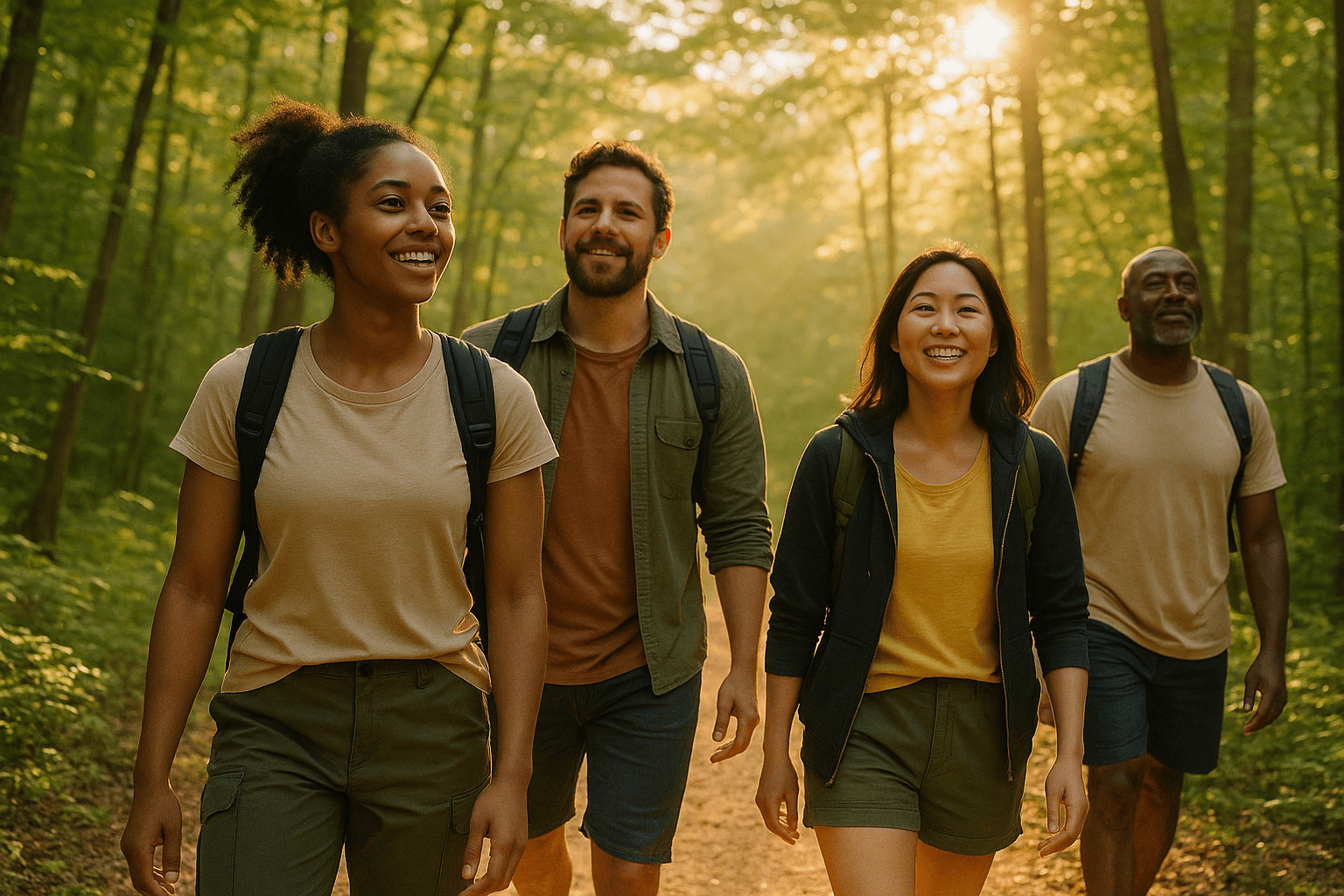
The path to purpose might be more literal than you think. Sometimes, it starts with an actual path - through the woods, along a river, up a hill - and the willingness to walk it with an open mind.
Ready to discover your purpose?
Take our free purpose assessment and start your journey today.
Take the Free Assessment